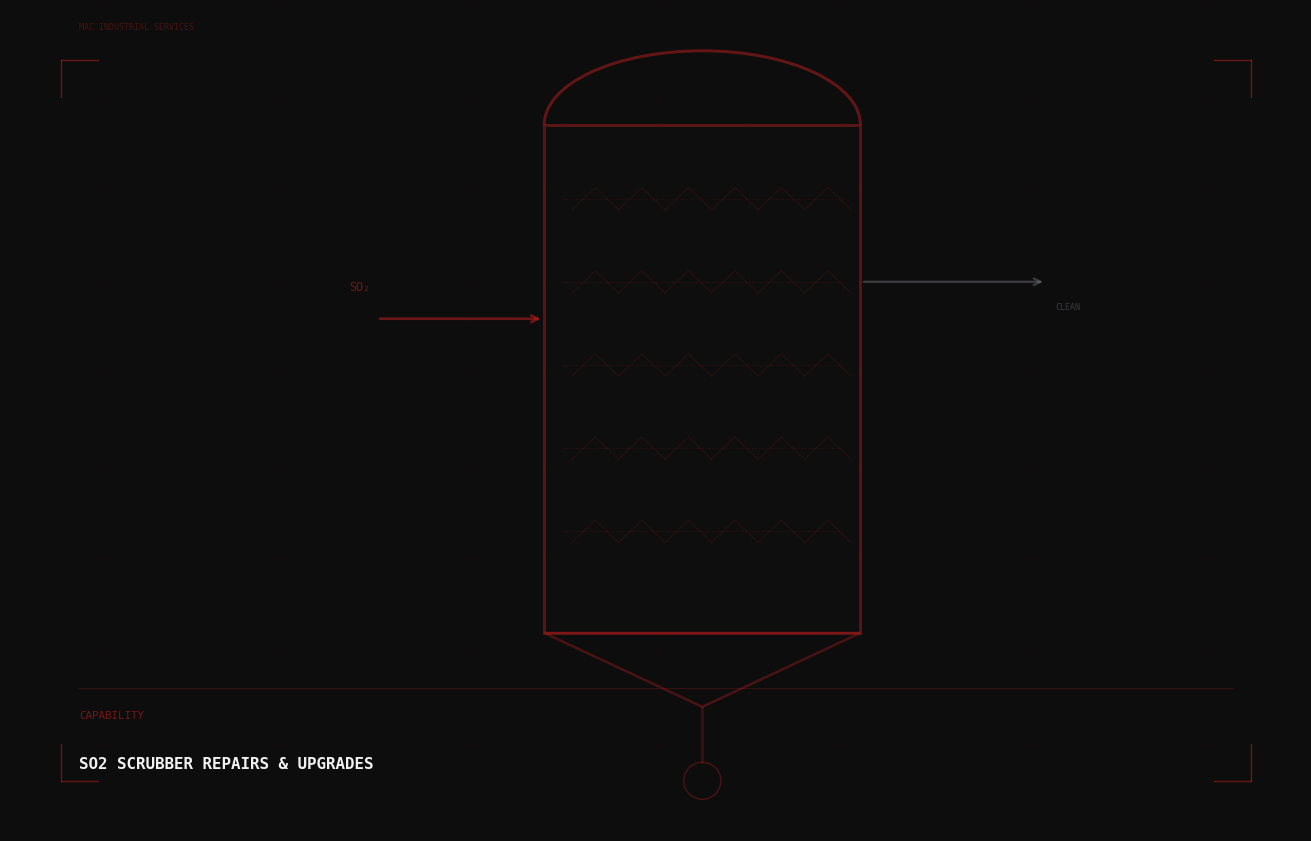
SO2 Scrubber Repairs & Upgrades
Repair, upgrade, and maintenance of wet and dry flue gas desulfurization (FGD) scrubber systems — absorber towers, slurry recirculation systems, mist eliminators, and associated structural and process piping.
Sulfur dioxide (SO₂) scrubbers — more formally called flue gas desulfurization (FGD) systems — are among the most complex and maintenance-intensive pollution control systems in coal-fired power generation. These systems handle highly corrosive limestone and gypsum slurries at elevated temperatures, making materials degradation a constant challenge. Unplanned FGD failures can force unit derate or shutdown and expose owners to regulatory penalties for emissions exceedances. MAC Industrial Services provides the repair and maintenance services to keep FGD systems performing reliably.
The absorber tower is the heart of a wet FGD system — and the primary site of degradation. Tower internals including mist eliminator modules, spray header systems, oxidation air distribution headers, agitator mechanical systems, and the rubber or alloy lining systems that protect the steel shell all require regular inspection and maintenance. MAC crews work within absorber towers during outages to replace damaged mist eliminator modules, repair spray nozzle headers, patch or replace deteriorated liner systems, and perform structural repairs to the tower shell and support structure.
Beyond the absorber, MAC provides maintenance and repair services for slurry recirculation pump sumps and piping, absorber bypass damper systems, gypsum dewatering equipment foundations, and the structural steel and FRP (fiber-reinforced plastic) platforms that provide access to FGD system components. We are experienced with the slurry-service piping materials used in FGD systems — rubber-lined carbon steel, alloy steel, and HDPE — and the joining methods appropriate to each.
What We Deliver
Technical Q&A
How corrosive is the environment inside a wet FGD absorber?
Very. The absorber interior is continuously exposed to acidic limestone slurry, saturated flue gas with SO₂, SO₃, HCl, and HF, and oxidized gypsum slurry. Carbon steel without protective lining degrades rapidly in this environment. Absorber shells are typically lined with rubber, fiberglass, or alloy coatings. MAC crews working inside absorbers follow client-specific PPE and air monitoring requirements, and use lining-compatible repair materials.
What causes mist eliminator failure and when do they need replacement?
Mist eliminators can fail from plugging by calcium scale or gypsum buildup, physical damage from debris or high-velocity flow, chemical degradation of the mist eliminator material, or warping from thermal cycling. Failed mist eliminators allow liquid carryover that can damage downstream ductwork and fans. MAC can assess mist eliminator condition during an absorber inspection and replace individual modules or full banks as required.
Related Service Lines
Outage Services
Expert management of planned and forced outages, delivering rapid mobilization and efficient execution to minimize your downtime.
Industrial Maintenance
Comprehensive maintenance services designed to maximize uptime, reduce operational costs, and extend the life of your industrial assets.
Capital Projects
Full-lifecycle capital project delivery from concept through completion, with dedicated project management and skilled craft labor.
Industry Applications
- Wet limestone FGD scrubbers (coal-fired utility plants)
- Dry and semi-dry FGD systems
- SO₂ scrubbers in waste incineration facilities
- Industrial SO₂ control systems in smelters and refineries
- Acid gas control systems in cement and lime kilns
Codes & Standards
- NFPA 68 – Standard on Explosion Protection by Deflagration Venting
- EPA 40 CFR Part 60 – New Source Performance Standards (NSPS)
- ASME PCC-2 – Repair of Pressure Equipment and Piping
- ASTM D4787 – Standard Practice for Continuity Verification of Liquid or Sheet Linings
- Manufacturer/OEM maintenance specifications for FGD components
Need this capability?
Talk to our team about your specific project requirements.
Contact MAC IndustrialExplore our full capability set
Twelve specialty areas across power, industrial, and process sectors.